
India Switchgear Market Outlook: How Grid Expansion Is Driving Demand
November 19, 2026
According to Technavio, India’s switchgear market is forecast to grow by USD 7.55 billion between 2025 and 2030, representing a compound annual growth rate of 9.1%. Rising overall electricity consumption accounts for only part of this expansion. Across the country, utilities are adding solar and wind generation capacity at pace, while energy-intensive facilities, most notably hyperscale data centers, continue to scale up. These shifts on both the supply and load sides are reshaping construction requirements across transmission networks, substations, and distribution grids, where switchgear handles connection, isolation, and fault protection.
Renewable Growth and Data Centers Are Changing Grid Requirements
Solar and Wind Growth Is Increasing Grid Connection Needs
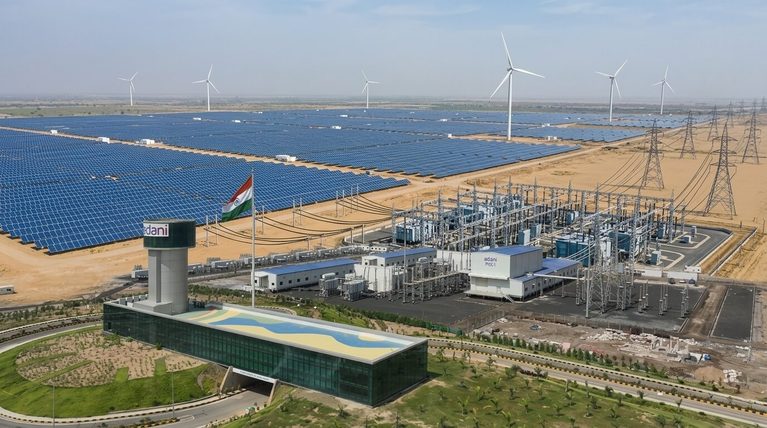
As of October 31, 2026, India’s cumulative installed solar capacity reached approximately 175 GW, alongside 59.2 GW of wind capacity, making solar the largest part of the renewable fleet.
A solar park or wind farm does not simply plug into the grid. Output runs through collection lines to a step-up substation and then onto high-voltage transmission. The sites with the best sun and wind, in states such as Rajasthan and Gujarat, are mostly far from the industrial and urban centres that use the power, so new long-distance links have to be built to carry it.
Output also moves with the weather, and operators correct for that in real time, adjusting voltage, balancing frequency and re-dispatching other plants when cloud cover builds or the wind drops. Each new connection point and substation bay needs its own switchgear and protection equipment, although how much depends on the voltage level and the layout of the project.
Data Center Growth Is Raising Power Reliability Requirements
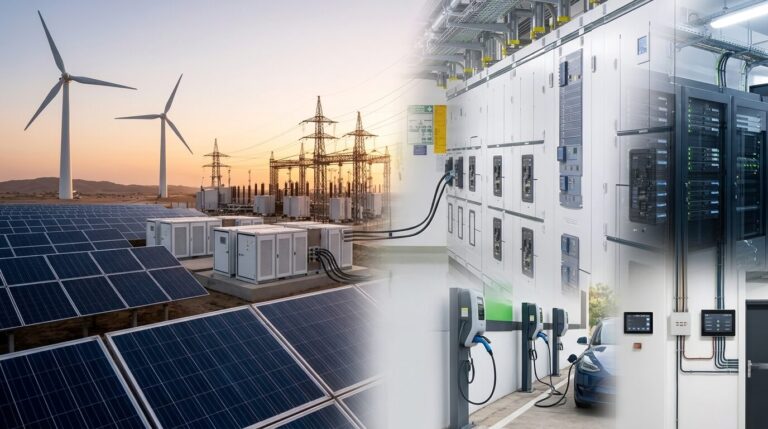
While renewable additions reshape power generation, load-side demand, led by data centers, is growing at an equally rapid rate. India’s installed data center power capacity rose from around 375 MW in 2020 to 1.57 GW by August 2026. It is projected to approach 8 GW by 2030.
Unlike conventional commercial buildings, server halls and cooling plants run around the clock, where even brief power interruptions can halt critical computing workloads and digital services. In order to scale up to multi-megawatt campuses, developers must implement multi-path power redundancy, backup generation, and dedicated grid connections.
Server halls and cooling plants run around the clock, and even a short interruption can halt computing workloads. Campuses of several megawatts are therefore usually built with more than one power path, on-site backup generation and a dedicated grid connection. That in turn means a substation on or near the site, medium-voltage switchgear, low-voltage main distribution and protection equipment. In some cities and industrial parks, the added load is also pushing utilities to expand their local distribution networks.
India Is Expanding Transmission and Substation Capacity
The CEA’s National Electricity Plan (Transmission) sets grid construction targets through 2032. Ministry of Power data published in July 2026 puts the peak demand the system is expected to meet by then at 388 GW.
Indicator | 2026 Baseline | 2032 Planned Target | Projected Growth |
|---|---|---|---|
Transmission Line Length | 509,000 circuit-km | 648,000 circuit-km | Approx. 27.3% |
Substation Transformation Capacity | 1,478 GVA | 2,345 GVA | Approx. 58.7% |
Inter-regional Transmission Capacity | 120 GW | 168 GW | 40% |
Note: Baseline figures are as of June 2026. The 2032 figures are planning targets, not completed capacity.
Transformation capacity is planned to grow by about 58.7%, more than twice the 27.3% set for line length. Lines extend the reach of the grid; transformers are what let power move between voltage levels at each substation, and they set how much it can receive and send on. With renewable projects adding connection points and load rising in cities and industrial areas, the substation is where this build-out matters most, and its role only grows from here.
How Grid Expansion Is Reshaping Switchgear Demand
More Substations Mean More Switching and Protection Equipment
Every new connection point on the transmission network needs breakers, isolators and protection relays. A solar park or wind farm is a good example. Inverters or turbine transformers feed medium-voltage collection lines, which run to a step-up substation. Medium-voltage switchgear on those circuits closes them, splits them into sections and isolates a fault when one occurs. On the high-voltage side, the main transformer and the grid-connection line each have their own breaker and protection.
Grid Expansion Is Driving Demand Across Voltage Levels
Equipment is bought at every voltage level, not at one. High-voltage switchgear goes into transmission substations. Medium-voltage panels are found in regional substations, in the collection systems of renewable plants and across industrial distribution networks. Low-voltage assemblies serve factories, commercial buildings and data centers.
Grid Reliability Is Raising Protection Requirements
More wind and solar, and more loads that never switch off, make the grid harder to balance and protect. When a fault occurs, the system has to locate it, open the faulty circuit and leave neighbouring lines and loads running. Buyers therefore look past rated voltage, rated current and short-circuit breaking capacity. They ask what protection relays are fitted, how the panel reports its condition and whether it works with the utility’s control system, and for a new substation or a large consumer, whether the equipment from different suppliers will work together.
Conclusion
India’s switchgear demand is being pulled from two directions. On the supply side, solar and wind additions mean more collection circuits, step-up substations and grid-connection bays. On the demand side, data centers add loads that cannot tolerate interruption and need redundant supply. Transmission and substation expansion, which the plan puts at 58.7% more transformation capacity by 2032, is the common ground: each new substation brings its own switchgear and protection scheme.