
What Is a Ring Main Unit? Working Principle, Types & Selection Guide
A Ring Main Unit (RMU) is a special switchgear that uses dual feeds to isolate faults while keeping loads powered. Select by voltage, insulation, and IP rating.
Quick Answer
A ring main unit (RMU) is a compact, factory-assembled medium- or high-voltage switchgear.
1. Dual-feed ring topology
2. 11–33kV secondary distribution
3. AIS / SF₆ / SF₆-free options
What Is a Ring Main Unit (RMU)
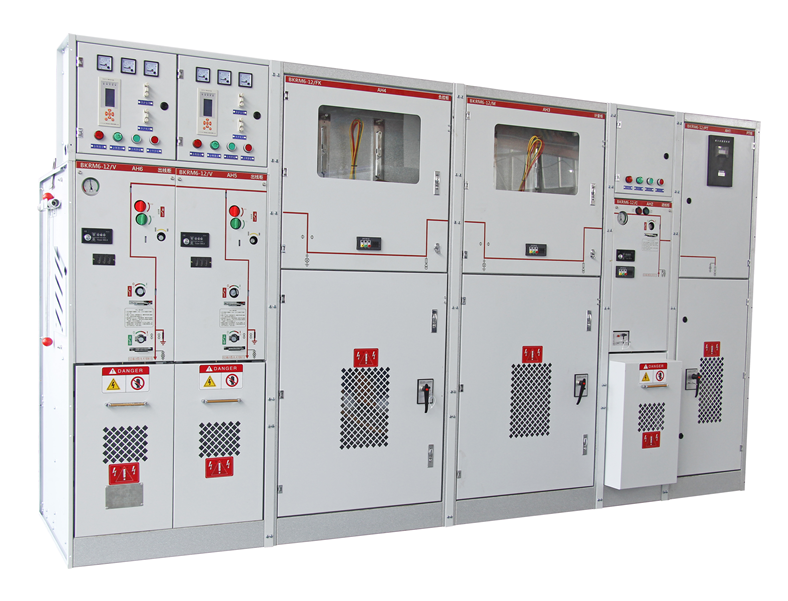
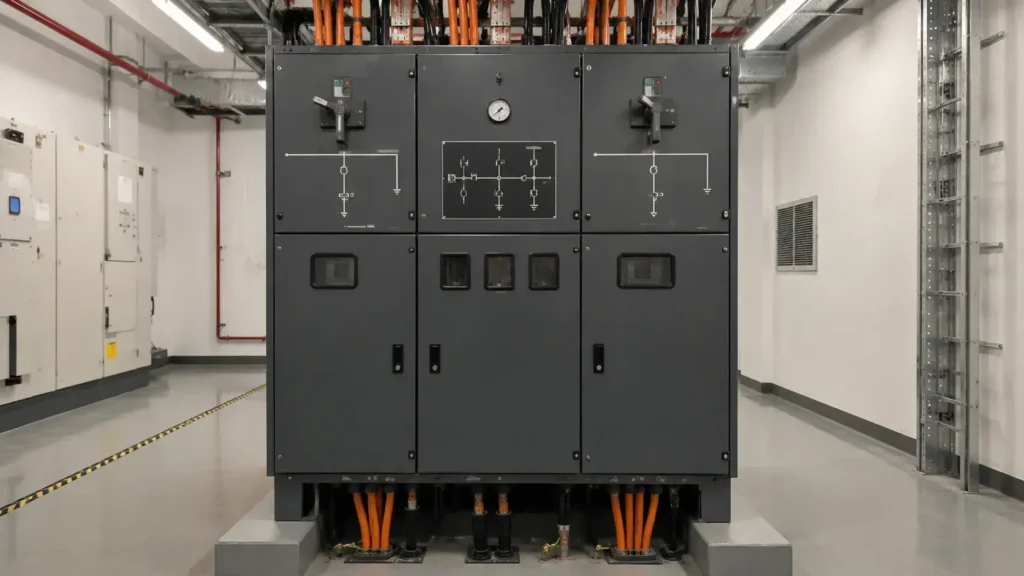
A Ring Main Unit (RMU) is a type of metal-enclosed medium-voltage switchgear typically rated 11–33kV used at the indoor secondary distribution level. It typically comprises two ring-type feeder switching units and a transformer feeder protected by a fuse switch or a circuit breaker. This equipment enables operators to perform connection, isolation, protection, and grounding operations on medium- or high-voltage feeders, while also maintaining power supply via a backup path in the event of circuit failure. The ring main unit is suitable for urban areas and industrial networks that cannot afford prolonged power outages.
How Does an RMU Work
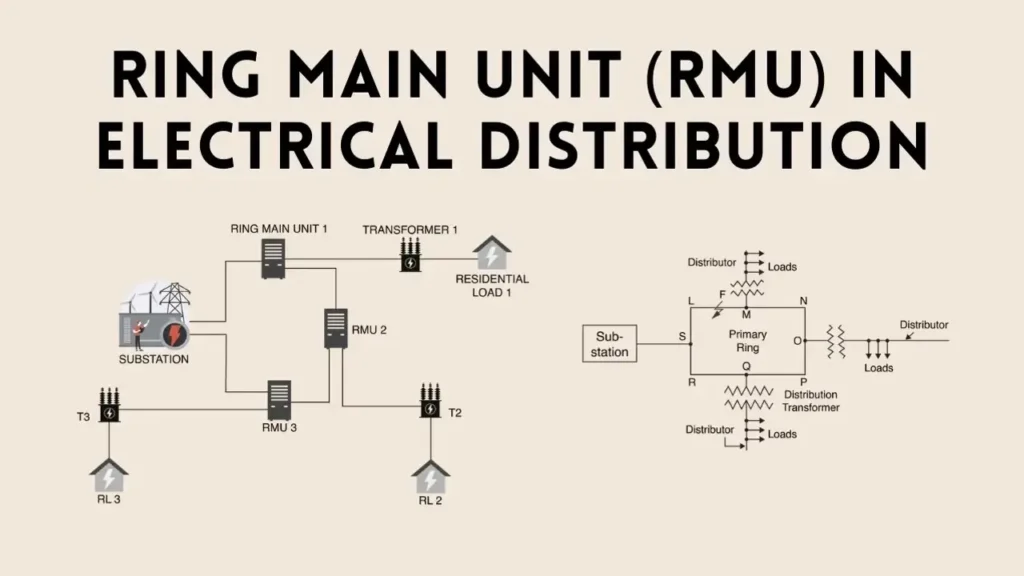
A medium-voltage distribution ring consists of several RMUs connected by cables in a closed loop, each supplying one or more transformers. One of the most common misunderstandings about RMUs hides in the word ring itself: although the cable route is physically arranged as a ring, the network is normally not operated as a fully closed loop.
The standard practice is closed-loop topology, open-point operation. There is one switch in the ring, the normally open point (NOP), which is kept open during normal service. This prevents uncontrolled parallel operation between the two supply sources and keeps fault levels and protection coordination simple. Each RMU is therefore fed from one side at a time, but it can be fed from either side, and that is what makes the topology so resilient.
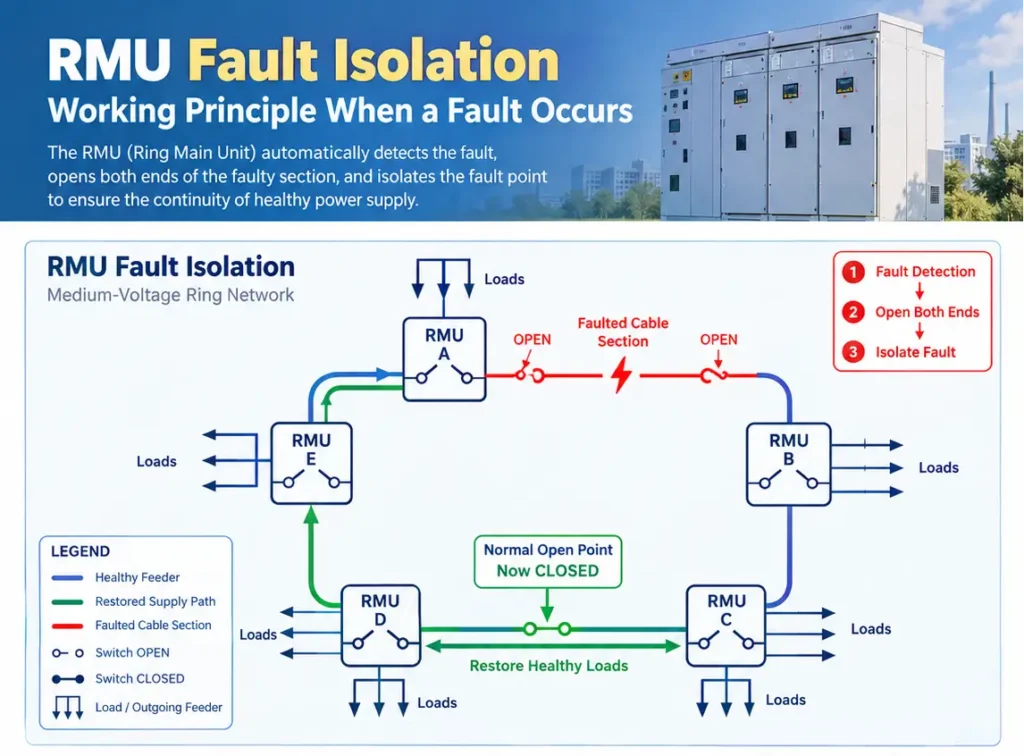
When a cable section faults, the sequence is:
Fault clearing: the short-circuit current is first interrupted by the upstream circuit breaker at the supplying substation. By the way, load-break switches cannot interrupt fault current.
Fault isolation: operators (or an automated scheme) open the ring switches on both sides of the faulted section, physically isolating it.
Supply restoration: the normally open point is closed, back-feeding the healthy loads downstream of the fault from the opposite side of the ring.
The loads on the faulted section itself do experience a short interruption, typically a few minutes with manual switching, or seconds with feeder automation. To one’s relief, every other customer on the ring is back in supply quickly, instead of waiting hours for a cable repair. After the faulted section is repaired, the original open point is restored, and the ring returns to its normal configuration.
The economic genius of the RMU concept is that this switching and isolation is achieved with simple, low-cost load-break switches rather than expensive circuit breakers — fault protection, where needed, is delegated to fuses or a breaker unit on the transformer feeder.
Key Components of an RMU
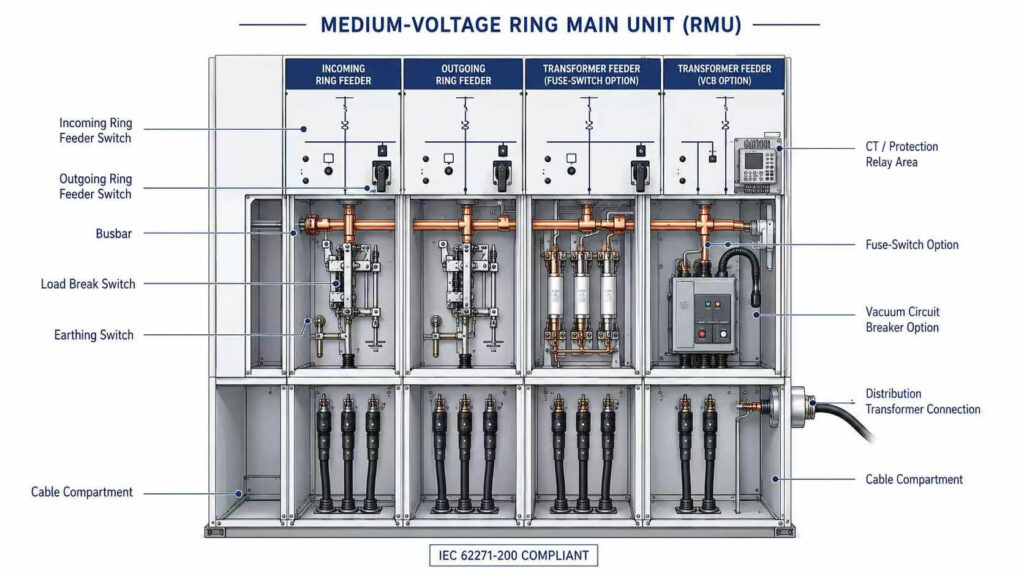
A standard RMU contains:
- Load-break switches (LBS): The load-break switch is the RMU’s main ring switch, rated 630A. It makes and breaks normal load, closed-loop, and cable charging current, so operators can reconfigure the ring without customer outages. It cannot interrupt short-circuit current, because that is the job of the fuses or breaker unit.
- Three-position switch: This device combines a disconnector and earthing switch in one interlocked mechanism. CLOSE connects the circuit, OPEN creates a visible isolation gap, and EARTH grounds the cable side for safe maintenance.
- Fuse-switch unit: The fuse-switch unit is the standard transformer protection device in an RMU. A current-limiting fuse clears transformer short circuits within milliseconds, faster than any relay, while its striker pin automatically trips the switch for isolation.
- Circuit breaker unit: For feeders where fuse protection is insufficient, a vacuum circuit breaker unit takes over. It interrupts full-load and short-circuit current and works with protection relays.
- Busbar system: The busbar is the common conductor electrically interconnecting all functional units inside the RMU. In gas-insulated designs, the busbar runs inside the sealed SF₆ tank; in solid-insulated designs, each phase is individually encapsulated in epoxy resin. Both approaches keep phase clearance constant and the footprint minimal.
- Earthing switch: The earthing switch bonds de-energized conductors to ground, protecting maintenance staff from back-feed or residual charge.
- Protection relay: Digital relays continuously monitor feeder currents and, on breaker-equipped units, trip within tens of milliseconds when they detect overcurrent, earth fault, or transformer faults.
- Cable compartments: Cable compartments are sealed bays where incoming and outgoing medium-voltage cables terminate. Each bay is interlocked with its switch, so the cover opens only after the circuit is earthed.
Insulation Types
- Air-insulated type: The most conventional design, using ambient air as both the insulating and arc-quenching medium. Simple in structure, low in initial cost, and easy to inspect and maintain, but relatively large in size and sensitive to ambient conditions such as humidity, dust, and salt fog. AIS are well suited to outdoor installations where footprint is not a constraint.
- SF₆ gas-insulated type: SF₆ has been the industry-standard insulating and arc-quenching medium for decades thanks to its outstanding dielectric strength, which allows extremely compact, fully enclosed, and virtually maintenance-free designs with high reliability in harsh environments. However, the EU is gradually forbidding SF₆ (EU F-gas Regulation (EU) 2024/573) because of its high global warming potential. This is now the decisive factor for many procurement decisions.
- SF₆-free (dry air + vacuum): A modern and eco-friendly alternative that produces no harmful emissions. Current interruption takes place inside a sealed vacuum interrupter, which is a mature technology with decades of proven service in high-voltage switchgear. No toxic by-products are generated in service, no gas recovery is required at end of life, and many designs achieve footprints identical to the SF₆ gas-insulated type.
Typical Applications
Thanks to its compact footprint, sealed construction, and dual-feed capability, the RMU has become the default switching point of medium-voltage secondary distribution. Typical applications include:
Urban power distribution center: Indoor secondary substations feeding residential and commercial loads. RMUs sit at the heart of urban underground cable rings, restoring supply in seconds by reconfiguring the ring after a cable fault.
Commercial & residential complexes: Shopping malls, hospitals, airports, and high-rise buildings, where stable power supply and a small electrical-room footprint are equally critical.
Industrial parks & data centers: Dual-feed transformer protection with automatic source transfer, ensuring that mission-critical loads ride through the loss of either incoming feeder.
Power generation plants: Wind power plants or photovoltaic (PV) power plants, where RMUs connect individual turbines or inverter stations to the medium-voltage collection grid. These power generation plants are often located in remote, harsh outdoor environments that favor sealed-for-life designs.
Infrastructure: Metro systems, tunnels, ports, and railway traction supply, where spatial constraints are of critical importance; furthermore, oil-filled or SF6 equipment is progressively ruled out in these areas, considering safety and environmental restrictions.
How to Select the Right RMU: 6 Key Factors
- System voltage and current: Match the RMU rating to your network (e.g., 12kV/630A ring, 200A transformer unit).
- Short-circuit level: Verify the rated short-time withstand current (e.g., 20kA/3s) against your utility’s fault level.
- Insulation technology: For space-critical projects, choose an SF₆-free dry-air/vacuum design. Solid insulation suits eco-conscious or maintenance-free requirements, and conventional air-insulated switchgear remains an option where space allows. Choose SF₆ only where regulations still permit it.
- Protection philosophy: Fuse-switch is applied for simple, low-cost transformer protection; circuit breaker unit is applied where selectivity and relay protection matter.
- Environmental rating: Check IP code and ambient conditions (humidity, altitude, pollution class).
- Certifications: Demand full type-test reports per IEC 62271-200, plus internal arc classification (IAC) for operator safety.
RMU vs. Conventional Switchgear
Parameter | Ring Main Unit (RMU) | Conventional Switchgear |
Voltage range | 11–33 kV (MV only) | LV, MV and HV |
Construction | Compact, sealed single tank | Modular panels; often withdrawable breakers |
Fault interruption | Fuses (transformer feeder) + circuit breaker unit | Circuit breakers |
Footprint | Small | Large |
Maintenance | Minimal — sealed for life, no internal inspection | Periodic inspection, contact resistance and insulation tests |
Expandability | Limited | High — panels can be added to the busbar at any time |
Typical applications | Urban underground networks, commercial buildings, data centers | Primary substations, industrial plants, utilities. |
Common Misunderstandings About RMUs
Misconception 1: “SF₆ RMUs leak and harm the environment.”
A properly manufactured SF₆ RMU is sealed for life (30+ years) with gas monitoring, and in-service leakage rates are typically below 0.1% per year. The real environmental risk comes from handling — commissioning, maintenance, and end-of-life recovery — not from normal operation. That said, tightening F-gas regulation is precisely why dry-air and vacuum-insulated alternatives are now the fastest-growing segment.
Misconception 2: “RMUs are maintenance-free, so no inspection is needed.”
“Maintenance-free” refers to the sealed main circuit — not the installation as a whole. Periodic checks of gas-pressure indicators, mechanical interlocks, cable terminations, and partial-discharge activity remain essential if the unit is to reach its 30-year design life without incident.
Misconception 3: “Fuse protection is outdated.”
For transformers up to roughly 800–1,000 kVA, a fuse-switch unit is still the fastest, most economical, and inherently selective protection available. It clears a severe internal fault in milliseconds, well before a breaker-and-relay scheme can operate.
Conclusion
The Ring Main Unit has earned its place as the standard building block of medium-voltage distribution: compact, safe, economical, and reliable thanks to its dual-feed topology. As distribution networks grow smarter and environmental regulation tightens, the RMU is evolving in step: motorized, sensor-equipped, and increasingly SF₆-free. Whether your project is an urban substation, a commercial complex, or a renewable energy collection grid, selecting the right insulation technology and protection scheme today is the key to 30+ years of trouble-free operation and to avoiding a stranded asset when the next round of F-gas rules takes effect.
Frequently Asked Questions (FAQ)
Still have questions about Ring Main Unit? Feel free to contact our engineers.