
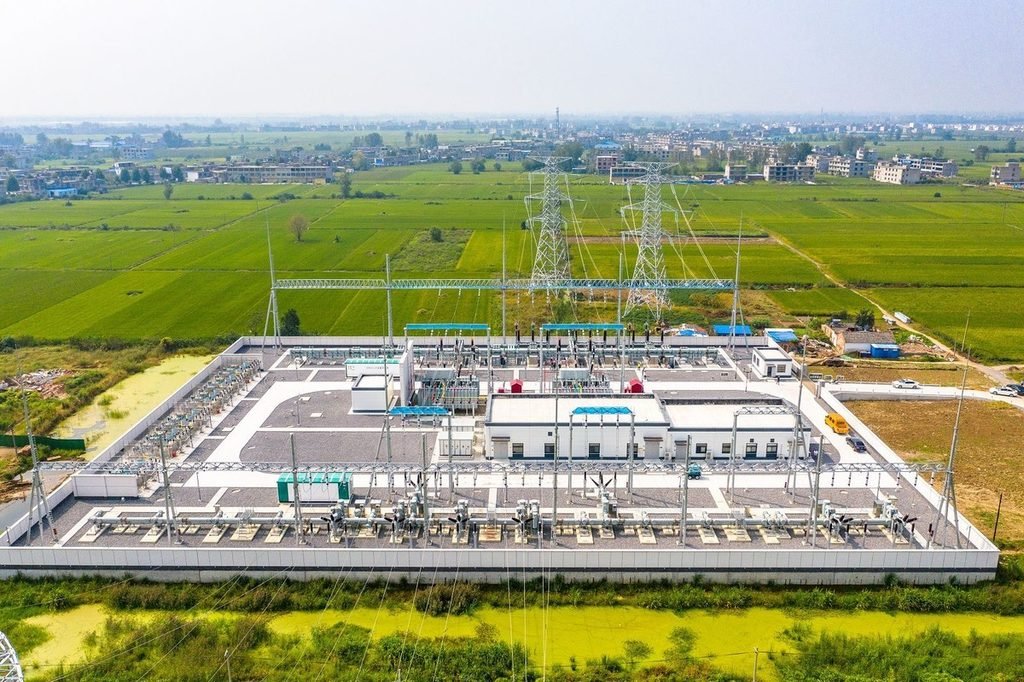
Project Background
A regional power generation company required a medium-voltage distribution solution for a new 110 kV step-down substation serving both a power generation plant and surrounding industrial users. The substation functions as a critical node in the local grid, responsible for stable power reception from the transmission network and reliable distribution to multiple feeders.
Challenges
- High reliability requirement as a grid connection point — equipment failure would affect both the generation plant and downstream users.
- Need for clear busbar arrangements and flexible feeder expansion to accommodate future load growth.
- Compliance with strict national grid standards for insulation levels, protection coordination, and operational safety.
- Limited project budget and construction window, demanding a cost-effective, quick-to-install solution.
Solution
XGN35-12 Box-Type Fixed Metal-Enclosed Switchgear was selected for the 10 kV side of the substation, configured with incoming cabinets, metering cabinets, PT cabinets, and multiple outgoing feeder cabinets. Key configuration highlights:
- Single-busbar (extendable to sectionalized busbar) design, allowing phased expansion as load grows.
- High insulation level and complete isolation between compartments, meeting grid-code requirements for substation-grade equipment.
- Integrated protection and measurement devices for precise fault detection and selective tripping, minimizing outage scope.
- Five-prevention interlocks and reliable grounding switches ensuring safe operation during maintenance of the multi-feeder system.
- Modular cabinet design allowing parallel installation, shortening the on-site construction period.
Results
- Successful grid connection and stable power reception and distribution since commissioning, with all feeders operating reliably.
- Selective protection tripping limited a downstream cable fault to a single feeder, avoiding a full substation outage.
- The modular design enabled smooth capacity expansion when a new industrial user was connected the following year.
- The project passed grid acceptance inspections on the first attempt, saving time and commissioning costs for the owner.