Goodbye, SF₆: Why Must the Electrical Industry Abandon SF₆?
Every time you flip a light switch, there’s a good chance sulfur hexafluoride (SF₆) helps keep it safe. For more than 50 years, it has been used to insulate switchgear and extinguish arcs, quietly safeguarding the safety and reliability of the power grid. Yet SF₆ has a hidden cost: It’s one of the most potent greenhouse gases ever known, and regulators across the world are now moving to phase it out. So what can SF₆ do, why has the electrical industry become so reliant on it, and how will the industry respond to a strict ban on SF₆? All your questions will be answered after reading this article.
Sulfur hexafluoride is an inorganic compound with the formula SF₆. It is a colorless, odorless, and non-flammable inert gas at ambient temperature and pressure. It is not formed naturally; actually, it was first synthesized in 1900 by two French chemists, Moissan and Lebeau, over 1000 years ago. It has a density of 6.0886 kg/m3 at 20 °C and 0.1 MPa, about five times that of air.
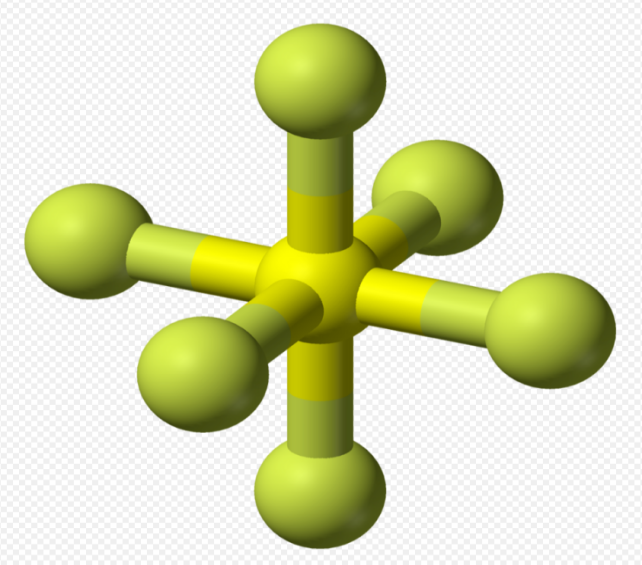
Why the Electrical Industry Relies on SF₆
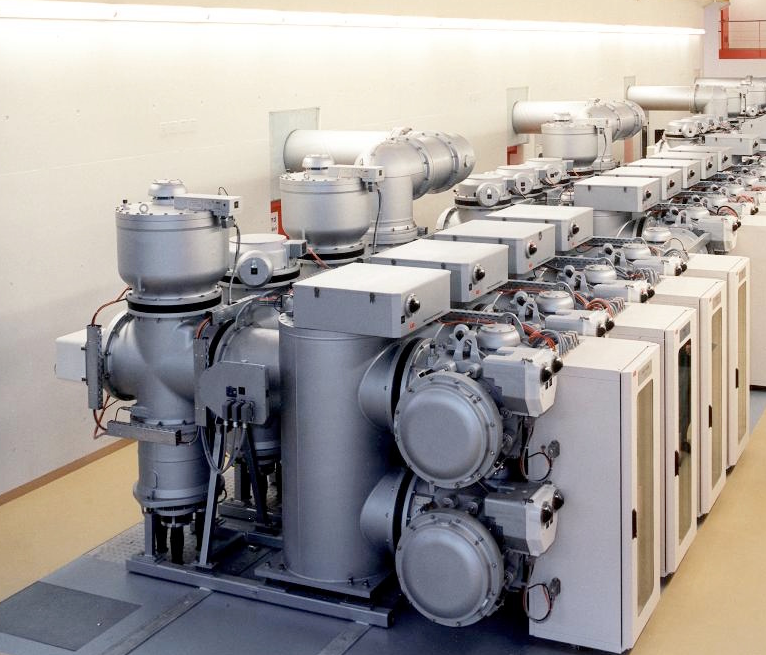
SF₆ is a strongly electronegative gas: the molecules readily attach free electrons to produce heavy negative ions, thus suppressing collisional ionization in the gas. The dielectric strength is approximately 2.5 times that of air in a uniform electric field. SF₆ exhibits maximum thermal dissociation at about 1700 °C, giving an arc-extinguishing ability about 100 times that of air. Due to its excellent arc-extinguishing and insulating properties, coupled with outstanding chemical stability, SF₆ has been traditionally used as an insulating and arc-extinguishing medium in high-voltage switchgear. Gas-insulated switchgear (GIS) with SF₆ is very space-efficient compared to conventional high-voltage open-air installations. It is independent of external weather and environmental conditions.
Health and Environmental Risks of SF₆

Inhaling high concentrations of SF₆ gas may cause breathing difficulties, skin discoloration, and spasms in the limbs. According to Chinese regulations, the concentration of SF₆ in the air of the workplace shall not exceed 6 g/m 3. If SF₆ decomposes by an electric arc or corona discharge, some corrosive and poisonous gases such as hydrogen fluoride (HF), sulfur dioxide (SO2), etc. will be generated, which are dangerous to the human body.
SF₆ is also a powerful greenhouse gas. It has 23,500 times greater global warming potential (GWP) than carbon dioxide (CO2) as a greenhouse gas (over a 100-year time horizon). To put it another way, one kilogram of leaked SF₆ equals roughly 25 metric tons of CO₂. Moreover, due to its exceptional chemical stability, SF₆, once leaked into the atmosphere and left without human intervention, can persist for over 1,000 years. Actually, now demand for electrical equipment is exploding due to the booming artificial intelligence (AI) data centers. Regulators conclude that the industry could not keep growing while relying on a gas that would eventually be phased out. The result is one of the largest forced technology revolutions in electrical engineering history.
EU Regulation 2024/573
EU Regulation (EU) 2024/573 gives a clear phase-out plan for the use of fluorinated greenhouse gases in electrical installations. From 1 January 2026, SF₆ or other F-gas shall no longer be used as insulation or for arc quenching in new medium voltage switchgear rated 24 kV or below. This ban shall apply to installations with a rated voltage of 24 kV to 52 kV from 1 January 2030. Furthermore, the use of SF₆ for maintenance and repair shall be prohibited from 1 January 2035, unless the gas is properly recovered or in the event of a technical or emergency.
According to the EU’s plan, the quantity of SF₆ placed on the market will be capped at 25% of 2023 levels by 2030. To facilitate the implementation of such measures, the regulation also explicitly stipulates relevant penalty measures: for non-compliant gases or equipment, a fine equivalent to five times the market value shall be imposed; in the case of repeated violations within a period of five years, the fine shall be equivalent to eight times the market value.
Over the past 50 years, advanced SF₆ technologies have greatly improved the reliability, cost-effectiveness, and resilience of power grids. The next three decades, however, will require a gradual transition to new ecosystem-based solutions to achieve the net-zero emissions target by 2050.
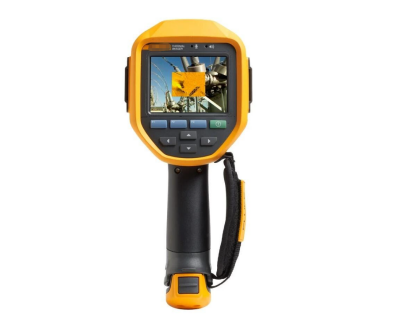
SF₆ Leak Detection Methods
Because SF₆ is odorless and colorless, detection relies on instrumentation. The main methods used in the field today are summarized below:
Pressure and Density Monitoring
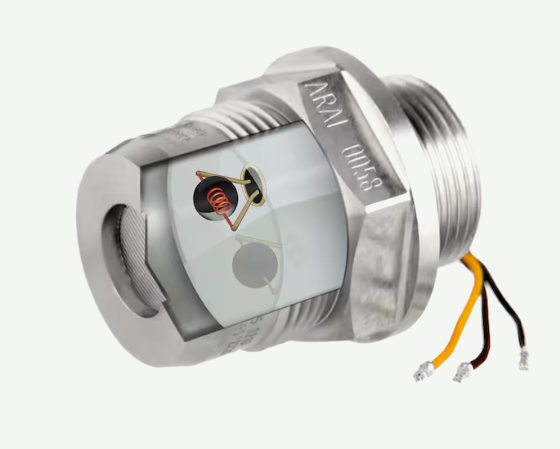
Every GIS bay carries gas-density gauges to monitor the variation of gas density, because pressure normally shifts with temperature. Modern digital density sensors can stream data continuously to a supervisory control and data acquisition system (SCADA), replacing traditional manual readings.
Electron Capture Detector (ECD)
The electron capture detector is a type of ionization detector. It responds only to electronegative substances, such as compounds containing halogens, sulfur, phosphorus, or nitrogen. The greater the electron absorption coefficient of a substance, the higher the detector’s sensitivity, whereas non-electronegative substances such as alkanes produce no signal. Since SF₆ is strongly electronegative, it can be detected with high sensitivity by this method.
Electrochemical Technology
SF₆ undergoes a chemical reaction when it comes into contact with the surface of a catalyst heated to approximately 200 °C, which produces a change in the electrical signal. This technology can reveal the presence of SF₆ by detecting these electrical signals. It features low cost, long service life, simple structure, and the capability of continuous operation.
High-voltage Breakdown Technology.
The working principle of this technology is based on the insulating property of SF₆. By monitoring the variation of the breakdown voltage between high-voltage electrodes, one can determine whether the air contains SF₆. It is simple in construction and cost-effective.
Infrared Spectroscopic Absorption Technology
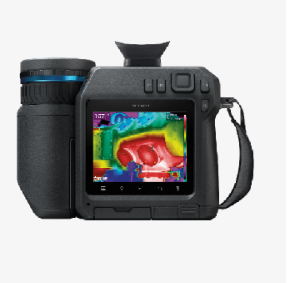
It is also known as laser technology. The working principle is that SF₆ has strong absorption properties for infrared radiation in some specific wavelength bands (about 10.6μm). Infrared spectroscopic absorption technology has the advantages of high cost, high sensitivity, strong resistance to environmental interference, and minimal detection error.
Emergency Response to SF₆ Leaks
- Evacuate and ventilate low-lying areas first. SF₆ is five times as dense as air, so it has a tendency to collect in trenches, cable basements, and pits if it leaks.
- Electrically isolate the affected compartment and check for arc decomposition products.
- Do not enter enclosed spaces without gas testing and self-contained breathing apparatus (SCBA).
- Recover remaining gas with certified recovery units into pressurized cylinders — never vent to the atmosphere. Venting SF₆ is illegal in the EU and reckless everywhere.
- Filter and purify recovered gas; test for moisture, decomposition products, and air content before reuse.
SF₆-Free Switchgear Market Outlook
The SF₆-free switchgear market was valued at roughly $1.7 billion in 2025 and is projected to reach $9.85 billion by 2034, with a 21.3% compound annual growth rate (CAGR), about three times the broader switchgear industry’s growth rate. Europe accounts for about 30% of the revenue. Asia-Pacific is the fastest-growing region.
Vacuum interrupters have already won the “breaking” battle—they need no gas at all. The remaining contest is insulation: natural-origin gas (air, CO₂/O₂) will ultimately displace fluoronitriles and fluoroketones, because Europe’s proposed per- and polyfluoroalkyl substances (PFAS) restriction would classify those as “forever chemicals” and stop using them in the near future. More than half of the EU’s medium voltage (MV) original equipment manufacturer (OEM) market share already uses natural-origin gas technology.
A new business is emerging: recovering SF₆ from installed gas-insulated switchgear (GIS) and refilling with g³-class mixtures—GE Vernova reports over 200 refilled bays to date. This extends asset life without full replacement and becomes the only compliant path once SF₆ is banned for servicing in 2035.
SF₆-Free Alternatives: Four Technical Routes
The replacement technologies fall into four families.
- Natural-Origin Gases: Clean Air, N₂ and CO₂ Mixtures
The simplest route is to replace SF₆ with gases already in the atmosphere—dry air (N2 and O2 mixture), pure N2, or CO₂/O₂ blends. Their global warming potential (GWP) is effectively zero, so there are no regulatory restrictions.
The trade-off is their much lower dielectric strength: equipment must either operate at higher filling pressure or use larger clearances, which partially sacrifices the compactness that made GIS attractive.
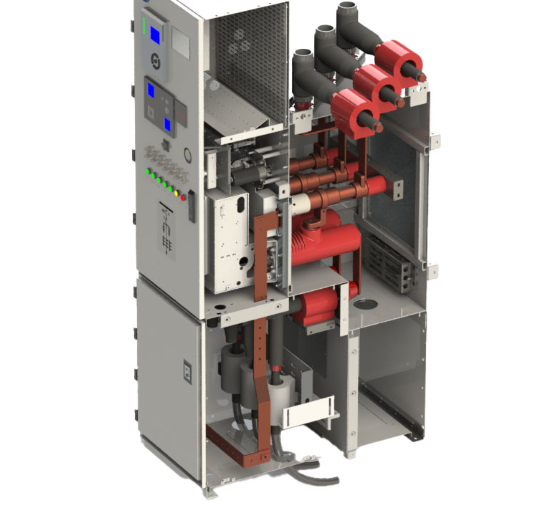
- Fluorinated Gases with Low GWP: Fluoronitriles and Fluoroketones
Synthetic alternatives, most notably the fluoronitrile (e.g., C₄F₇N) and the fluoroketone (e.g., C₅F₁₀O), can be mixed with CO₂, O₂, or dry air to achieve dielectric performance close to SF₆ at only a fraction of its GWP. For example, the gas “g3” from GE promises to reduce GWP by 99% compared to that of SF6.
These mixtures allow SF₆-like compact GIS designs, but they remain fluorinated gases, so under the EU’s rules they are permitted only at higher voltage levels. They also suffer from drawbacks, such as liquefaction at very low temperatures and the need to manage decomposition by-products.
- Vacuum Interruption Technology
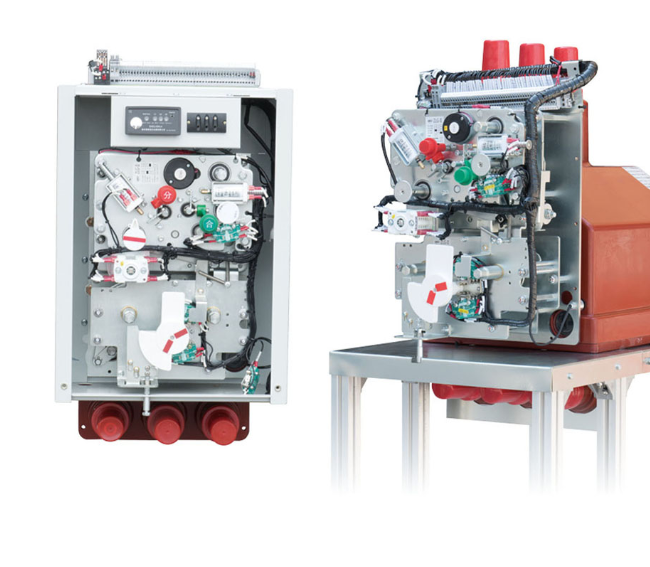
None of the alternative gases matches SF₆’s arc-quenching capability, so the key trend is to move current interruption into sealed vacuum interrupter (VI) bottles and use the surrounding gas only for insulation.
Vacuum interrupters are a proven technology with decades of field experience in MV applications: they require no arc-quenching gas, have long mechanical and electrical life, and enable repeated switching operations. Vacuum switchgear does not emit any greenhouse gases, so there is no need to be concerned with gas-handling obligations.
- Solid Insulation
Another approach is to use a solid insulation medium instead of any gases. Solid-insulated switchgear (SIS) uses epoxy-cast bushings, busbars, and housings, usually combined with vacuum interrupters for switching. This type of switchgear can offer great resistance to harsh environments, such as humidity, dust, and salt fog.
Its limitations lie in poor heat dissipation performance and the risk of partial discharge at resin–conductor interfaces. In addition, it has greater weight and is more difficult to recycle at the end of its service life.