Switchgear vs. Switchboard: What’s the Real Difference?
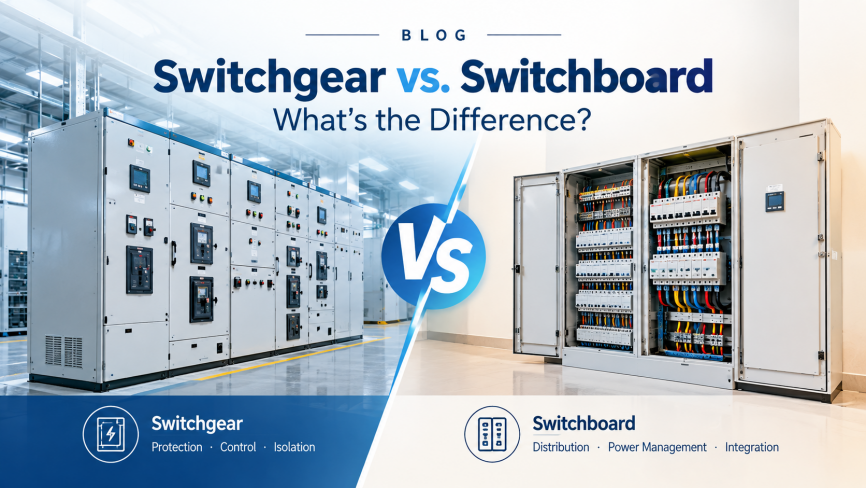
A switchboard is a low-voltage electrical device. It receives incoming power and distributes it to multiple downstream loads such as feeders, branch circuits, panelboards, transformers, and motor control equipment.
A switchgear cabinet is not merely an advanced switchboard. It is an electrical assembly that integrates isolation, control, distribution, and protection functions. Its main function is to protect equipment, interrupt fault current, and ensure the safe operation of the electrical system.
Switchboards and switchgear are often confused in everyday use, sort of because they share similar core components such as breakers, busbars, meters, and control devices. They even look kind of similar in appearance, and people take for granted that their roles are the same, too. This article clarifies the real differences between them in construction, function, application, and standards.
Design and Construction: How They Differ?
Structure Design:
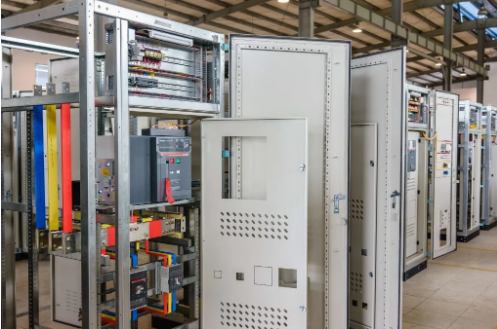
Switchboards use air gaps to separate internal components. Molded-case circuit breakers (MCCBs) are used in switchboards and are usually bolt-on or plug-in. They are more compact and primarily designed for front access.
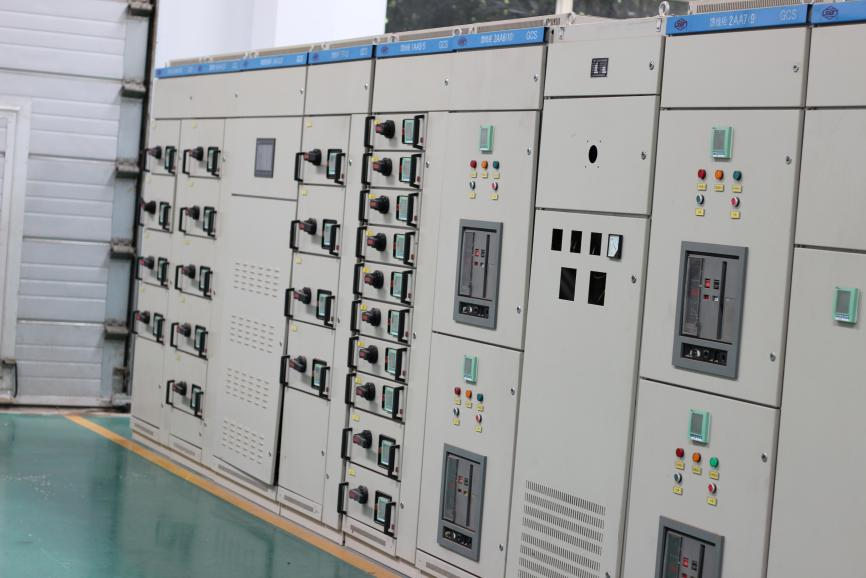
Switchgear houses each breaker in its own metal compartment. This design contains fault current, limits arc-flash propagation, and improves personnel safety during maintenance. Usually, it is accessible from both the front and rear ends.
Voltage Rating Version:
Switchboards are often used in low voltage applications, typically rated at 600 V or less. Switchgear can be used for a wide range of voltages, including low voltage (up to 1 kV), medium voltage (up to 38 kV), and high voltage (up to 800 kV or more).
Physical Size:
Switchgear takes up a larger floor area but offers greater flexibility for future expansion. Switchboards are smaller in size. Usually, it is freestanding or wall-mounted.
Arc Flash Safety:
Switchgear is designed to contain and extinguish arc faults using advanced methods such as vacuum chambers, compressed gas, oil, or solid insulation material. The switchboards themselves are not really “arc-resistant,” though some designs feature arc mitigation.
What’s Inside? Core Components Compared
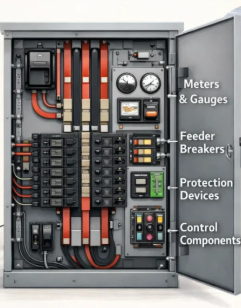
A typical switchboard consists of a main breaker or switch, a bank of feeder breakers, and a set of busbars. It also includes metering instruments, protection devices, and control components. The switchboard is designed for power distribution.
The switchgear assembly has a more sophisticated structure and a more specialized set of components: circuit breakers and disconnectors for switching, contact systems for current conduction, protection relays and fuses for fault detection and clearing, metering and monitoring devices for system supervision, and dedicated control compartments and isolation sections for safe operation. These features are typical of a fundamentally different design philosophy: Switchgear is not only for distribution of electricity but mainly for protection and controlled switching.
Typical Applications: Where Each One Fits?
Switchboards are usually preferred when a project primarily requires organized low-voltage power distribution in a relatively compact and practical configuration. In low-voltage commercial and industrial systems, switchboards are commonly used for commercial buildings, office buildings, hotels, shopping centers, residential complexes, and sub-distribution systems.
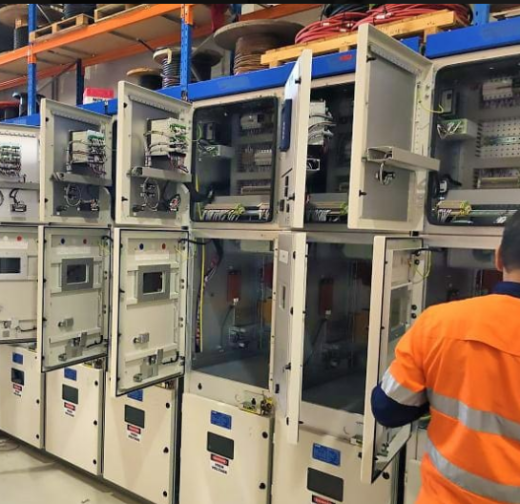
Switchgear refers to equipment intended primarily for switching, fault interruption, protection, control, and safe isolation of electrical circuits and equipment. Typical applications include utility substations, industrial plants, heavy industry, petrochemical systems, data centers, hospitals, and critical infrastructure.
Standards and Testing
Switchgear and switchboards are built and tested differently. Low-voltage switchgear is designed, manufactured, and tested in line with UL 1558 ANSI C37.20.1 and NEMA SG-3, plus arc resistant builds are further checked against IEEE C37.20.7. The power circuit breakers living inside are listed to UL 1066. Switchboards, by contrast, comply with UL 891 and NEMA PB-2, and typically use molded-case breakers listed to UL 489. In IEC-based markets, both product families fall under IEC 61439, but within different construction forms and verification requirements. These different standards produce different proven performance. Switchgear is tested for a short-time withstand current of up to 30 cycles (~0.5 seconds), meaning the bus and breakers can hold the full fault current for half a second while a downstream device clears it. Switchboards are tested for only about 3–4 cycles. Switchgear testing also mandates metal barriers between compartments, separating breakers from busbars and lugs. Switchboard construction permits open internal arrangements separated by air gaps.
Investment Cost
Switchgear is the more costly option, with a heavier construction, arc-flash protection, longer short-time ratings, and complex interlocking mechanisms, all of which add to the initial cost and long-term maintenance.
Switchboards are generally a more cost-effective option and are suitable for budget-limited or smaller projects.
Advantages of Switchgear
High-voltage capability.
This is the most distinguishing feature of switchgear. It is used for medium and high voltage, typically over 600 V. In large power plants or substations, it can withstand voltage up to 350 kV.
Complex and robust internal construction.
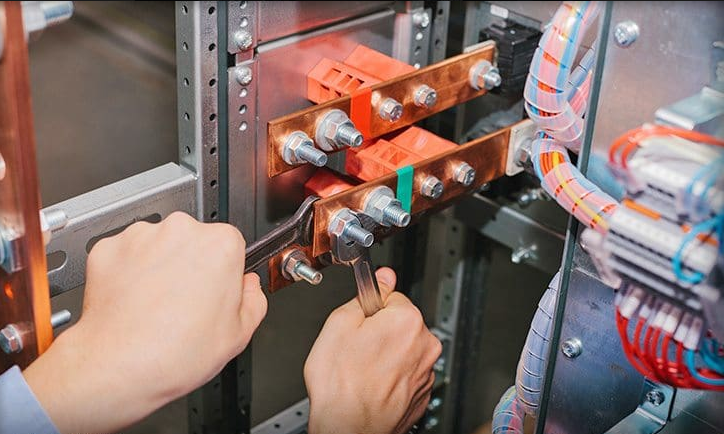
Open up a switchgear cabinet, and you’ll find a meticulously organized assembly of components. All the breakers, relays, and busbars are in individual isolated metal compartments. This design makes it safer and greatly simplifies maintenance.
Advanced safety and protection features.
Modern switchgear actually combines basic breaker protection with extra arc-flash mitigation and advanced protective relays. In practice, these parts work together to ensure a rapid response during faults to minimize risk and equipment damage.
Maintenance and serviceability.
One of the biggest advantages of switchgear is its draw-out breaker design that allows technicians to maintain or replace a faulty breaker without deenergizing the whole system. That matters a lot for mission-critical operations where downtime loss is really catastrophic.
Advantages of Switchboards
Simple and compact construction.
The design of a switchboard is simple in comparison to the complex interior design of switchgear. Breakers and meters are mounted directly to the panel with no internal isolated compartments. The simplicity of this makes it more compact, with a smaller footprint.
Basic protection and simple maintenance.
It provides basic overcurrent protection. Its simple structure facilitates direct and convenient daily inspection and replacement operations, making it suitable for residential, commercial, and light industrial facilities.
How to Choose Between Switchgear and a Switchboard?
The choice between switchgear and switchboard is never really just a matter of picking the cheaper option. It is a critical engineering decision that hinges on safety, reliability, system complexity, and long-term total cost of ownership (TCO). Many factors should be taken into consideration, including available space and budget, maintenance, cost of downtime, future expansion, project specification requirements, and so on.
Space and Budget.
For projects with limited budget and space, for example, a small commercial building or office, a switchboard is the economical choice. It can meet basic distribution requirements easily. A switchgear cabinet gives better performance and flexibility, but it costs roughly 2–3 times that of a switchboard.
Maintainability and Cost of Downtime.
Switchgear is designed to be serviceable without downtime. For continuous-process plants and mission-critical facilities such as data centers, where downtime is measured in thousands of dollars per minute, that is often the deciding factor when selecting electrical equipment.
By comparison, the simpler structure of a switchboard makes routine checks and breaker replacement pretty easy, but servicing a switchboard typically requires de-energizing the system completely.
Short-circuit Current Analysis.
During the design phase, the electrical engineers need to calculate the detailed fault current. If the available fault current is below 65 kA, a switchboard is usually sufficient. Higher fault currents call for more robust protection, so it is necessary to choose switchgear rated at 100 kA or higher.
Frequently Asked Questions (FAQ):
Need switchgear for your next project? Explore our switchgear solutions or contact our engineering team for a technical consultation.